#running

Articles tagged: running

102 articles

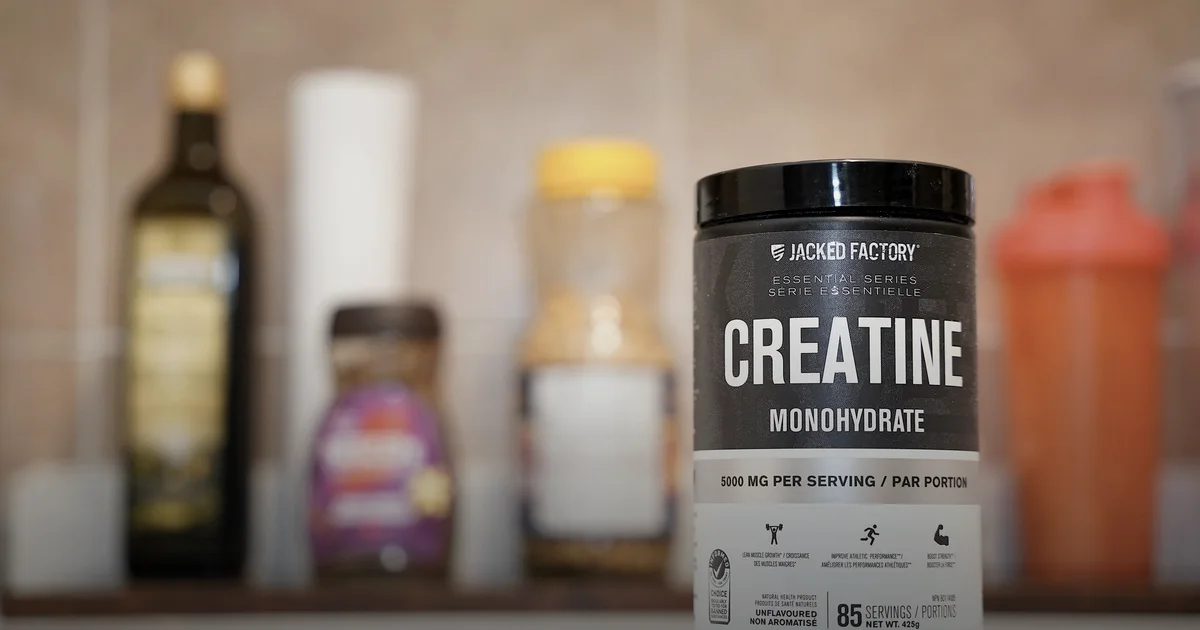
L-carnitine: 18 randomised trials, endurance edges up slightly — and not one of them found any “fat burning”

L-carnitine: 18 randomised trials, endurance edges up slightly — and not one of them found any “fat burning”

In Russia, L-carnitine is searched for about 100 thousand times a month on Yandex, almost always as a fat burner. A systematic review from October 2026 gathered 18 placebo-controlled studies: some of them do show an endurance gain, but fat oxidation during exercise did not change after a single dose or after weeks of supplementation. We look at why, and at the one condition under which carnitine actually gets into muscle.

Maxim Belyaev•
Read more →

Running with music in earbuds: running feels easier but breathing gets worse — a randomised trial in 32 runners

Running with music in earbuds: running feels easier but breathing gets worse — a randomised trial in 32 runners

Loud music in earbuds made a 20-minute run feel easier — and at the same time pushed breathing towards rapid and shallow, increased vertical oscillation by 30% and raised energy expenditure by 1.1%. We look at an Italian study from October 2026, what it means for easy runs and races, and why it is no reason to throw away your playlist.

Olga Marchenko•
Read more →
Garmin bought Moxy: what a muscle oxygen sensor really measures — up to ±20 points between legs and a threshold that repeats to within 7 watts

Garmin bought Moxy: what a muscle oxygen sensor really measures — up to ±20 points between legs and a threshold that repeats to within 7 watts

Without a press release, Garmin bought Moxy — the longest-standing maker of muscle oxygen saturation (SmO₂) sensors — and back in February filed an application for the Muscle Battery trademark. We explain what SmO₂ shows, why the absolute number is noisy by 14–18 points, and how the threshold from the trend reproduces from test to test within a few watts.

Ekaterina Gromova•
Read more →
Pickle juice for cramps: 49 seconds shorter in the lab, zero change in the blood — what we know about the shots McDonald's handed out before the Chicago Marathon

Pickle juice for cramps: 49 seconds shorter in the lab, zero change in the blood — what we know about the shots McDonald's handed out before the Chicago Marathon

Before the Chicago Marathon McDonald's gave away free 60 ml bottles of pickle juice, and at IRONSTAR Sirius, a Russian triathlon series, coach Suren's team handed out brine with and without vinegar in random order for a study. We look at what is known: a reflex in the mouth rather than “topping up salt”, a fresh meta-analysis of cramp risk factors, and how much pickle juice to drink.

Maximum heart rate: “220 minus age” underestimates it on average in endurance athletes — data from 4375 people and how to find yours

Maximum heart rate: “220 minus age” underestimates it on average in endurance athletes — data from 4375 people and how to find yours

Stephen Seiler's group compared the real maximum heart rate of 4375 runners, cyclists and triathletes with the formulas. On average the formulas err low by nearly 5–6 beats, and for some individuals by 15–20. We look at how to determine your maximum in the field and why a lab test can miss it too.

Olga Marchenko•
Read more →
Caffeine gum: 25 studies, an effect size of 0.195 and exactly zero in people who already drink a lot of coffee

Caffeine gum: 25 studies, an effect size of 0.195 and exactly zero in people who already drink a lot of coffee

Caffeine gum is leaving its military niche and moving into running, and interest in it keeps growing. A meta-analysis published in September 2026 gathered 25 studies and 390 participants: the gain is real, it is statistically significant and it is also tiny. And in some people it is absent altogether — we look at who exactly, and at why you have to chew for ten minutes.

Ekaterina Gromova•
Read more →
Runner's knee: 188 marathon runners, the Q-angle and hip exercises that turned out to be no better than standard care

Runner's knee: 188 marathon runners, the Q-angle and hip exercises that turned out to be no better than standard care

Pain under the kneecap is the most common running injury, and the standard answer to it goes like this: “weak glutes, train the hip, the Q-angle will correct itself”. A study published in September 2026 compared exactly such a programme with standard care in 188 marathon runners: over 16 weeks both groups improved, and no difference between them was found. Here is what a runner should take from that.

Heel spur and plantar fasciitis: 63 RCTs, 4,170 people and a ranking of the treatments that really take the pain away

Heel spur and plantar fasciitis: 63 RCTs, 4,170 people and a ranking of the treatments that really take the pain away

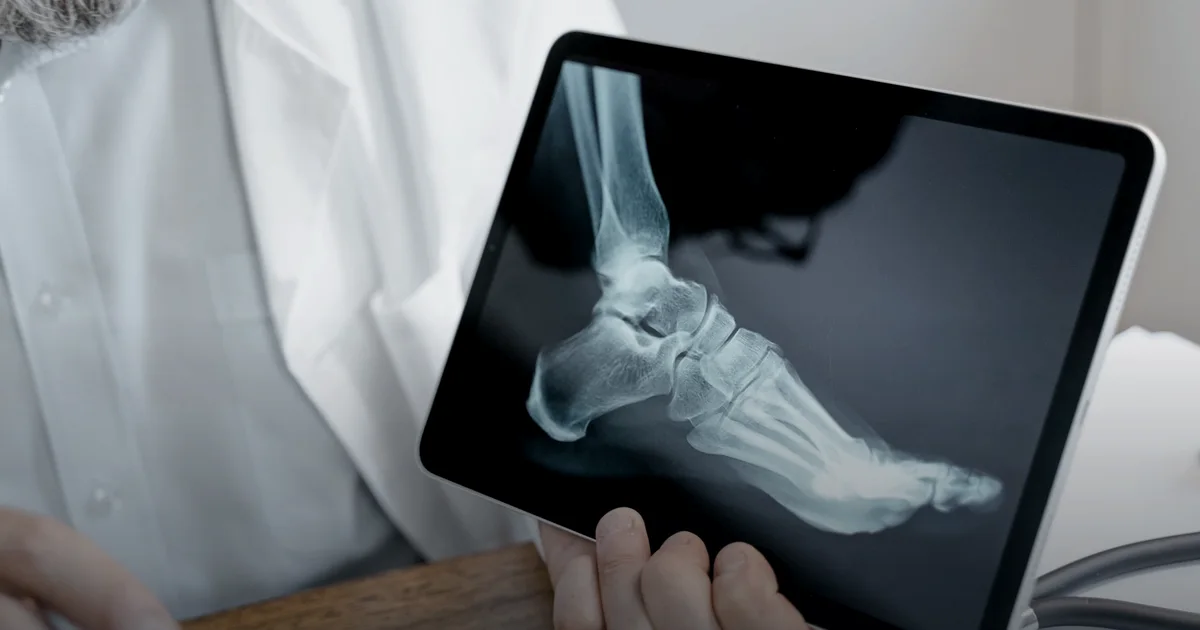
Heel pain is one of the most searched-for running problems, even though the bony outgrowth behind the popular name turns up in a third of people whose heels never hurt. A 2026 network meta-analysis compared seven treatments for plantar fasciitis not with placebo one by one but with each other — and it turned out that each has its own horizon: one works for the first month, another for a year. Here is where a runner should start.

Olga Marchenko•
Read more →
The runner's high: anandamide rises every 14 kilometres of a marathon, and after 230 kilometres there is no euphoria left

The runner's high: anandamide rises every 14 kilometres of a marathon, and after 230 kilometres there is no euphoria left

A 2026 field study followed the “runner's high” across a whole marathon for the first time: 19 runners gave blood every 14 km, and another 36 ultrarunners before and after races of 100, 160 and 230 km. Anandamide rose all the way, anxiety fell — but after the ultras euphoria did not rise at all. And endorphins, it seems, have nothing to do with any of it.

Anna Severova•
Read more →
Hydrogel carbohydrates: 2.1% faster over 5 km in runners, zero gain in cyclists — what alginate really does

Hydrogel carbohydrates: 2.1% faster over 5 km in runners, zero gain in cyclists — what alginate really does

On 6 September the Russian runner Rinas Akhmadeev dropped out of his marathon debut after reaching halfway in 1:04:08 — because of gut problems; by his own account, his fuelling did not sit well. Hydrogel is sold as the answer to exactly this problem. A 2026 systematic review pulled together nine RCTs: carbohydrate oxidation rises at high doses and the stomach sometimes copes better, but only one running study showed a clear performance gain.

Dmitry Volkov•
Read more →

Meniscus after a marathon: +38% extrusion on ultrasound in 100 runners and a return to normal by day four

Meniscus after a marathon: +38% extrusion on ultrasound in 100 runners and a return to normal by day four

Orthopaedic surgeons from Hokkaido University scanned the knees of 100 amateur runners before the start, right after the finish and on each of the next five days. The medial meniscus shifted outwards by an average of 0.44 mm, stayed there for three days and was back in place on the fourth. The shift was larger in runners who were heavier, ran more and loaded the inner side of the knee harder.

Paraxanthine instead of caffeine: what 14 rowers and 12 runners revealed about the “clean stimulant” made from a coffee metabolite

Paraxanthine instead of caffeine: what 14 rowers and 12 runners revealed about the “clean stimulant” made from a coffee metabolite

The liver turns about 70% of caffeine into paraxanthine, and now it is sold on its own — as a stimulant without the insomnia and jitters. In a 2026 RCT in rowers, paraxanthine by itself did not speed up a 2000 m test, and in a 2024 study of a 10 km run it did not change finishing time at all. It disrupted sleep after an evening session less — but that was measured with a questionnaire.

Andrey Leskov•
Read more →
Your watch lies by kilometres: eight GPS models, a 3.2–6.1% error, and why the forest is “shorter” and the track is “longer”

Your watch lies by kilometres: eight GPS models, a 3.2–6.1% error, and why the forest is “shorter” and the track is “longer”

The same long run: you have 32 km, your partner has 29. A look at validation studies of sport watches: up to 9% under-reading in the city and the forest, systematic over-reading on the track, a 12.1% error for the worst model over 4,000 m, and where the extra three kilometres come from when there are no satellites.

Ekaterina Gromova•
Read more →